
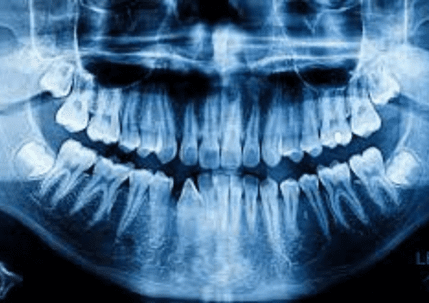

It’s easy to be skeptical about X-rays whether we speak of a full-body X-ray or a dental X-ray. Radiation is radiation. It’s vital to know all the facts before judging too harshly, though. Dental X-rays can be one of the best preventive tools for your dental health. We offer various treatments at Summerlin Dental Solutions, but helping you become better informed is one of the best ways to decide what will be best for you.
According to the AmericanDental Association, healthy adults typically receive routine dental X-rays every two to three years. The timeline for children is every one or two years, and one and a half for teens. Children and teens require more X-rays than adults because their teeth are still developing, which makes them more susceptible to cavities.
In general, Dr. Marianne Cohan will determine how often dental X-rays need to be taken for each individual patient, taking into consideration physical symptoms, clinical findings, and risk for infection. Most dental professionals use Caries Management by Risk Assessment (CAMBRA) to help them determine how often X-rays should be taken, so you can rest assured that we are making an informed decision.
In addition to that, it should be reassuring to know that these days, most dental X-rays are digital, which significantly reduces your exposure to radiation. In fact, you’re likely to pick up more radiation just from being in the sun! Lead aprons and thyroid collars are also tools that Dr. Marianne Cohan and our team use to keep X-ray exposure to a minimum.
At our office, Summerlin Dental Solutions, we believe that diagnosing cavities and other potentially harmful conditions by dental X-ray does you more good than harm. If you have any questions about our X-rays, feel free to give our Las Vegas office a call or bring up the subject during your next appointment!
CLICK HERE TO SCHEDULE YOUR APPOINTMENT!
GET TO KNOW YOUR BEST DENTIST IN SUMMERLIN
Dr. Marianne Cohan was voted The Best Dentist/ Dental Office and Best Cosmetic Dentist from The Las Vegas Review-Journal in 2020 and 2021. She received her Doctor of Dental Surgery (DDS) from the State University of New York at Buffalo in 1992.
With an emphasis on cosmetic dentistry, complete makeovers, and implant dentistry, Dr. Cohan is committed to continuing education and feels that we never stop learning. Dr. Cohan takes pride in using high-powered magnification to perform minimally invasive restorative dentistry. She uses all the latest technological advances including digital radiography, digital photography, computer simulations, and high-resolution pictures of your proposed treatment on 55-inch screens. She also utilizes CBCT (cone beam) and laser technology.
Dental X-Ray Safety
Q1: How much radiation do dental X-rays expose me to?
Digital X-rays at Summerlin Dental Solutions deliver up to 90% less radiation than conventional film X-rays. A full set of dental X-rays exposes you to approximately 0.005 mSv — less radiation than you receive from natural background sources in a single day of normal life.
Q2: Are dental X-rays safe to have every year?
Yes. The radiation from digital dental X-rays is extremely low and well within safety limits established by the ADA and the FDA. The diagnostic benefit of catching cavities, bone loss, and infections early far outweighs the minimal radiation exposure.
Q3: Why does my dentist need X-rays if my teeth feel fine?
Many dental problems — including cavities between teeth, bone loss from gum disease, infections at root tips, and impacted teeth — cause no symptoms in their early stages. X-rays detect these hidden problems when they are small and treatable, before they become painful emergencies. AI-assisted analysis at our office adds another layer of detection.
Q4: How often should I get dental X-rays?
For most patients, bitewing X-rays every 12 months and a full panoramic X-ray every 3 to 5 years are recommended. Patients with active gum disease, frequent cavities, or complex dental work may need X-rays more often. Dr. Cohan follows ADA guidelines and only takes X-rays when diagnostically necessary.
Q5: Does Summerlin Dental Solutions use digital or film X-rays?
We use 100% digital X-rays, which produce instant images at dramatically lower radiation than film. Digital images can be enhanced, enlarged, and viewed on our dual-screen monitors so you see exactly what Dr. Cohan sees during your exam.
Q6: What additional safety measures does the office use during X-rays?
We use lead aprons and thyroid collars for shielding, fast digital sensors that minimize exposure time, rectangular collimation to limit the X-ray beam to only the area being imaged, and the ALARA principle (As Low As Reasonably Achievable) for all diagnostic imaging.
Q7: Are dental X-rays safe during pregnancy?
The ADA and ACOG (American College of Obstetricians and Gynecologists) consider dental X-rays with proper shielding safe during pregnancy when needed for diagnosis. However, Dr. Cohan typically postpones routine X-rays until after delivery unless an urgent dental issue requires immediate imaging.
Q8: Can children safely have dental X-rays?
Yes. The radiation from pediatric dental X-rays is extremely low, especially with digital technology. X-rays are important for children to monitor tooth development, detect hidden decay between baby teeth, and identify potential orthodontic issues early.
Q9: What is AI-assisted X-ray analysis?
Summerlin Dental Solutions uses AI technology that reviews every diagnostic image alongside Dr. Cohan, analyzing patterns to identify early-stage decay, hairline fractures, subtle bone loss, and developing pathology that may be difficult to detect on traditional visual review. Every patient benefits automatically at no extra charge.
Q10: Can I request copies of my dental X-rays?
Yes. Digital X-rays can be easily shared electronically with specialists, other dental offices, or provided to you directly. Just ask our team at Summerlin Dental Solutions and we will arrange transfer of your records.
Page 35/44 — /dental-x-rays-are-they-safe/
Are Dental X-Rays Safe?
Q1: Should I be worried about radiation from dental X-rays?
No. Digital dental X-rays at Summerlin Dental Solutions emit extremely low radiation — about 90% less than old film X-rays. A routine set of dental X-rays delivers less radiation than a short airplane flight. The diagnostic benefits of early detection vastly outweigh the negligible radiation exposure.
Q2: How do digital X-rays compare to traditional film X-rays?
Digital X-rays deliver up to 90% less radiation, produce instant images (no chemical processing), can be enhanced and magnified for better diagnosis, are easily shared electronically, and are reviewed by both Dr. Cohan and AI-assisted diagnostic software. They are superior in every measurable way.
Q3: Can I refuse dental X-rays?
You have the right to decline X-rays, but doing so significantly limits Dr. Cohan’s ability to detect hidden problems like cavities between teeth, bone loss, infections, and fractures. Many serious dental conditions are invisible without imaging. We only recommend X-rays when they are diagnostically necessary.
Q4: Why do I need X-rays at every dental visit?
Not every visit requires X-rays. Routine bitewings are typically taken annually, and full panoramic X-rays every 3 to 5 years. Your specific schedule depends on your oral health risk factors. Dr. Cohan follows ADA guidelines and never takes unnecessary X-rays.
Q5: Are dental X-rays safe for elderly patients?
Yes. Age does not increase risk from dental X-rays. In fact, X-rays are especially important for older patients to monitor for bone loss, root fractures under existing dental work, and oral pathology that becomes more common with age. Digital technology keeps radiation exposure minimal.
Q6: What problems can dental X-rays detect?
Cavities between teeth, decay under existing fillings and crowns, bone loss from gum disease, infections at tooth root tips, impacted teeth, cysts and tumors, fractures, and developmental abnormalities. Many of these conditions cause no symptoms until they are advanced.
Q7: How does AI help with X-ray analysis at Summerlin Dental Solutions?
AI-assisted diagnostic software analyzes every X-ray alongside Dr. Cohan, detecting subtle findings that might be missed on traditional review. It catches early-stage decay, hairline cracks, and bone loss patterns by analyzing data points across millions of images. This dual review provides the most thorough diagnosis possible.
Q8: Do dental X-rays expose my whole body to radiation?
No. The X-ray beam is focused narrowly on the specific area being imaged. Lead aprons and thyroid collars shield the rest of your body. The exposure is localized and extremely small — comparable to the background radiation you absorb from natural sources in a few hours.
Q9: What type of X-rays does Summerlin Dental Solutions use?
We use bitewing X-rays (for detecting cavities between back teeth), periapical X-rays (for evaluating root tips and bone), panoramic X-rays (for a full view of all teeth and jaw), and 3D CBCT scans (for implant planning and complex cases). All are digital for maximum safety and image quality.
Q10: How long do dental X-rays take?
Individual digital X-rays take only seconds to capture. A complete set of bitewings takes about 5 minutes. A panoramic X-ray takes about 15 seconds. 3D CBCT scans take less than 30 seconds. Results are available immediately on our dual-screen monitors for real-time discussion with Dr. Cohan.
Dr. Cohan is always available to her patients and is available for any dental emergency.