Serving all neighborhoods: Summerlin, Rhodes Ranch, Queensridge, Sun City, Henderson, Spring Valley, Centennial Hills, Red Rock, The Summit, The Lakes, Centennial Hills and the rest of our Valley
Get the straighter, more confident smile you’ve always wanted with Invisalign! For a limited time, enjoy $500 off your Invisalign treatment.
Offer valid for new Invisalign cases only. Cannot be combined with other discounts or insurance.
Text
Email
Print
Summerlin Dental Crowns
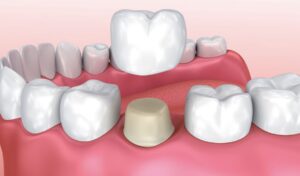
Dental crowns are custom-made caps designed to cover and protect damaged, decayed, or weakened teeth. They restore your tooth’s shape, size, and function while providing an additional layer of strength. Crowns are crafted from materials such as porcelain, ceramic, or a combination, chosen based on durability, appearance, and the tooth’s location in your mouth.
The process of placing a crown typically requires two dental visits. During the first appointment, Dr. Cohan and our team will prepare the tooth by removing any decayed or weakened portions, thereby providing a secure foundation for the crown. If needed, additional support may be built up using filling material.
Once the tooth is shaped, precise impressions are taken so that the crown fits perfectly. These impressions are sent to a dental laboratory where the permanent crown is custom-made to match your natural teeth in color and contour.
While the permanent crown is being developed, a temporary crown is placed over the prepared tooth to protect it. At the second visit, the final crown is carefully fitted and adjusted before being securely bonded using dental cement.
This meticulous process is followed so that you get a snug, seamless fit, and that the crown functions and feels like a natural part of your smile.
Restored functionality: Dental crowns restore damaged teeth to full working order. Whether you’re chewing tougher foods or simply speaking clearly, the crown enables your teeth to function as they should, allowing you to maintain your everyday routines without inconvenience.
Enhanced aesthetic appeal: Custom-made crowns are designed to blend with your natural teeth, matching their color, size, and shape. Porcelain or ceramic options deliver a natural, lifelike appearance, while concealing imperfections such as discolorations or cracks.
Durability: Thanks to the high-quality materials used, crowns are incredibly durable and can last for many years with proper care. Their solid construction helps withstand the normal wear and tear of daily use, providing a long-term solution for restoring and protecting your teeth.
Preservation of natural teeth: Crowns can prevent further decay or structural damage by capping a damaged or weakened tooth. They act as a shield, protecting the underlying tooth from additional harm while eliminating the need for more invasive procedures.
Versatile applications: Crowns address a range of dental issues, from covering large fillings to repairing fractures or serving as the final step in root canal therapy. They are even versatile enough to be used as anchors in dental bridges.
Comfort and convenience: Once placed, crowns feel just like natural teeth. They don’t require any special dental maintenance beyond good oral hygiene, such as brushing, flossing, and regular dental check-ups.
Boosted confidence: A healthy-looking, functional smile can do wonders for your self-esteem. Knowing your teeth are protected while looking their best can give you the confidence to speak, smile, and interact freely in both personal and professional settings.
Marianne Cohan, DDS, has over 30 years of experience doing crown work for patients in the Las Vegas area. Call +1(702) 341-9160 or use our contact form to reach out online.
Types of Dental Crown Materials: Which Is Right for You?
Not all crowns are made the same. The material your dentist recommends depends on which tooth needs the crown, how visible it is when you smile, how much chewing force it will absorb, and your budget. At our Summerlin practice, Dr. Cohan walks every patient through the trade-offs before treatment begins, so the choice is yours, not ours. Here’s how the four most common crown materials compare:
Material
Best for
Durability
Drawbacks
Porcelain (Zirconia) Most popular for visible teeth
Front teeth, premolars, anyone wanting a natural look. Holds up well for back teeth too in modern monolithic versions.
10–15+ years. Highly resistant to chipping. Doesn’t stain.
Higher cost than PFM. Can wear opposing teeth slightly if not polished correctly.
Our recommendation in most cases: zirconia (porcelain) crowns for visible teeth and posterior molars. They look natural, hold up to years of biting force, and don’t show the dark margin line that older PFM crowns can develop as gums recede. For front teeth where appearance is everything — like a single tooth next to natural teeth — Dr. Cohan often recommends e.max for its superior translucency. Either way, the choice is made together at your consultation, after we see the tooth on the 3D scanner.
How Much Does a Dental Crown Cost in Las Vegas?
The honest answer: it depends on the material, your insurance, and whether the tooth needs additional work like a root canal or core buildup before the crown can be placed. Most Las Vegas dental crown costs fall within the ranges below. At our Summerlin practice, you’ll always receive a written treatment plan with exact pricing before any work begins — no surprise charges, no upselling.
Crown cost without insurance
In the Las Vegas market, dental crowns typically range from $1,200 to $2,500 per tooth depending on material:
Porcelain-fused-to-metal (PFM): $1,000–$1,500
Zirconia (porcelain): $1,300–$2,300
E.max (premium aesthetic): $1,500–$2,500
Gold alloy: $1,500–$2,500 (varies with gold market price)
If a root canal is needed first, that’s an additional $1,000–$1,500 separately. A core buildup, if required, is typically $250–$400.
Crown cost with insurance
Most dental insurance plans cover crowns at 50% after deductible, up to your annual maximum (typically $1,000–$2,000 per year). For a $1,500 zirconia crown, that means insurance covers around $750 and your out-of-pocket is roughly $750. We file the claim for you and verify your benefits before treatment, so you’ll know your exact cost upfront.
If you’ve already used most of your annual maximum, we can sometimes split treatment across calendar years — placing the temporary crown in December and the permanent crown in January — so you get two years of insurance benefits on one tooth.
Preferred Patient Program (no insurance)
If you don’t have dental insurance, our in-house [Preferred Patient Program](/preferred-patient/) gives you discounts on all major procedures including crowns, plus two cleanings and exams per year for a flat annual fee. For most patients, the program saves more than a typical PPO insurance plan would on a single crown.
Financing: 0% interest options
For crowns and other restorative work, we offer:
CareCredit — 0% interest for 12 months on treatment plans over $200. Apply online in 5 minutes; instant decision.
HFD (Healthcare Finance Direct) — near-100% approval rate even for patients who’ve been turned down by CareCredit. Flexible payment terms up to 60 months.
HSA / FSA — dental crowns are an eligible expense under both Health Savings Accounts and Flexible Spending Accounts. We provide receipts coded for HSA/FSA reimbursement automatically.
[Learn more about our financing options here.](/patient-info/financing/)
Do You Actually Need a Crown? (Or Would a Veneer or Onlay Work?)
Many patients arrive at our Summerlin office certain they need a crown, when in fact a less invasive (and less expensive) treatment would work just as well. The right choice depends on how much of the tooth structure remains, where the damage is, and what’s most important to you — appearance, durability, or cost. Here’s how to think through it:
Tooth situation
Best option
Why
Crack or chip on the front of a tooth, no structural damage
Veneer or dental bonding
A veneer covers only the front surface of the tooth, preserving most of your natural tooth structure. Crowns are unnecessarily invasive for cosmetic-only issues.
Cavity or damage covering 1–2 cusps of a back tooth (less than half the tooth)
Onlay (sometimes called a partial crown)
Onlays cover only the damaged area, preserving healthy tooth structure. They’re a strong middle-ground between fillings and full crowns. Often called “three-quarter crowns.”
Significant decay, cracked tooth, large old filling failing, or root canal completed
Crown
When more than half the tooth is compromised, a full crown is needed to protect what remains and restore full chewing function. Crowns wrap completely around the tooth.
Tooth is severely damaged below the gumline or has a poor root prognosis
Implant (extraction + replacement)
Crowns require healthy underlying tooth structure. If the root is failing, a [dental implant](/implants/) gives a longer-lasting result than crowning a compromised tooth.
Multiple front teeth need both color correction and structural support
Crowns or veneers depending on damage
If teeth are intact but discolored or misshapen → veneers. If teeth are fractured, worn down, or have large fillings → crowns. A consultation determines which mix is right.
The honest truth about “crown vs. onlay”: onlays are often a better choice when the tooth qualifies, because they preserve more of your natural tooth structure. We use onlays whenever possible. If we recommend a full crown, it’s because the damage genuinely warrants it — and you’ll see the 3D scan and X-ray evidence at your consultation, so the decision is yours.
Crown Recovery: What to Expect After Your Appointment
Modern crown placement is a same-day or two-visit procedure with minimal recovery. Most of our Summerlin patients return to normal eating within a few days. Here’s what to expect:
First 24 hours
Mild numbness from the local anesthetic for 2–4 hours after the appointment — avoid hot drinks, hot food, and chewing on the treated side until sensation returns. Some sensitivity to cold and pressure is normal as the tooth adjusts. Stick to soft foods (yogurt, eggs, smoothies, soup), and chew on the opposite side. Over-the-counter ibuprofen handles any mild discomfort.
48 hours
Sensitivity should be decreasing. You can resume most foods, but still avoid anything sticky (caramel, taffy, gum) or extremely hard (hard candy, ice) on the crowned side. The cement holding a permanent crown in place is fully cured at this point, but the tooth and surrounding tissue are still settling.
1 week
Cold and heat sensitivity should be gone. The crown should feel like part of your natural bite. If you still notice an uneven bite — or if pressure on the crown causes pain — call us at [(702) 341-9160](tel:+17023419160). A simple bite adjustment takes 5 minutes and usually solves the issue immediately. Don’t push through it.
Special note for Las Vegas patients
Las Vegas’s dry climate matters during recovery. Dehydration reduces saliva flow, which is your mouth’s natural defense against bacteria around a fresh crown margin. Drink more water than usual for the first week — aim for at least 64 oz daily. If you’re an outdoor or pool-side patient, also be mindful of summer heat sensitivity in the first 48 hours; a freshly placed crown is more reactive to temperature swings than a fully settled one.
When to call us
Most recoveries are uneventful, but contact us right away if you experience:
Persistent throbbing pain after 72 hours
The crown feels loose or shifts when you bite
Sensitivity that gets worse instead of better
Visible gap between the crown and your gumline
A foul taste near the crown
Caring for Your Dental Crown: Making It Last 15+ Years
With proper care, a well-placed dental crown should last 10 to 15 years — and we regularly see crowns from Dr. Cohan’s earlier years still functioning beautifully at 20+ years. The single biggest predictor of crown longevity is daily care, not the material itself.
Daily care essentials
Brush twice daily with a soft-bristled toothbrush. The crown surface is smooth, but the gumline where the crown meets your natural tooth needs careful attention.
Floss every day — and especially around the crown. Slide the floss in gently and out the side, rather than pulling it straight up, so you don’t catch the crown margin.
Use a non-abrasive toothpaste. Whitening toothpastes that contain large abrasive particles can dull porcelain over time.
Consider a Waterpik or interdental brush if you have larger gaps between teeth — these clean the gumline around crowns more effectively than floss alone.
Foods and habits to avoid
Hard foods on the crowned side: ice, hard candy, popcorn kernels, raw nuts. Even a strong crown can fracture from a single hard bite.
Sticky foods: caramels, taffy, sticky chewing gum can pull at the crown margin and weaken the cement bond.
Bruxism (teeth grinding): if you grind your teeth at night, get a custom nightguard. Grinding will shorten any crown’s lifespan from 15 years down to 5 or less. We make custom guards in-house.
Using your teeth as tools: opening packages, biting fingernails, chewing pens — these damage crowns faster than years of normal eating.
When to replace a crown
Most crowns are replaced for one of three reasons: visible gum recession exposing the margin (10+ years out), decay developing under the crown edge, or aesthetic mismatch as neighboring teeth darken with age. At your twice-yearly cleanings, we check every crown’s condition with both visual exam and X-ray. If a crown is showing wear, we’ll let you know and discuss whether replacement is needed now or can wait.
One of the most popular ways to protect a seriously fractured or decaying tooth is with a dental crown. Crowns have a high success rate because of the diversity of materials utilized in their construction, but they can come off at any time. Don’t be alarmed if your dental crowns in Las Vegas have come loose or come off. Call the best dentist in Summerlin and we will explain how to deal with this dental emergency.
What are Dental Crowns and How Do They Work?
Dental crowns are tooth-shaped coverings that are placed on top of fractured, decayed or otherwise damaged teeth. They fully surround the damaged tooth and are secured in place using special dental cement. Metal, porcelain, and zirconia are among the materials that may be used to make them. Your crowns are created to match the size, shape, and color of your natural teeth and to fit in with your smile.
What Should I Do If Mine Breaks?
Make an appointment with your dentist right away. They will try their utmost to see you within 24 hours because a missing crown is considered a dental emergency. Meanwhile, stay away from sugary, acidic, cold and hard foods.
If you still have the crown, use toothpaste or a temporary dental glue to reattach it to the damaged tooth. Until you can visit your dentist, this will help safeguard the fragile tooth.
If you lose your crown, notify your Summerlin Dental office right away. To avoid any pain and a worsened condition, they will see you as soon as feasible. Keep the exposed tooth clean and, if necessary, take over-the-counter pain relievers.
What Causes Crowns to Come Off?
While it is impossible to prevent the loss of a dental crown entirely, there are several frequent issues to consider.
Deterioration of the natural tooth enclosed beneath the prosthetic crown: While the prosthetic crown cannot rot, the natural tooth encased beneath it can. The dental cement is frequently broken down around the gum line where the crown and teeth connect.
Deteriorating dental cement: This cement might degrade over time due to tooth disease or just the passage of time, causing your crowns to loosen.
Sticky and sweet foods: While the odd sticky pleasure may not hurt your teeth, daily consumption of toffees or caramels will. Sweets tug at your crowns, weakening them over time. When a crown becomes attached on a sticky treat, it might completely fall off.
Dental crowns are critical for safeguarding the fragile teeth beneath them. They, like any other dental repair, require special attention in order to perform effectively. If you believe your crowns are at risk of coming loose, speak with your Summerlin Dental Office.
Affordable Smiles for Every Budget
Insurance or Financing, We Have a Plan for You
With a variety of payment options—including insurance acceptance, flexible financing, and in-house payment plans—we ensure that your path to a beautiful smile is as easy and affordable as possible.
We know that costs can be a concern for patients, especially if their insurance doesn’t cover this work. That’s why Summerlin Dental Solutions makes financing available through CareCredit. Our hope is that this will enable you to access our award-winning dental care while still managing your budget.
Dr. Cohan has been voted Best Dentist in America by her colleagues. She’s a 19-time winner of the Best of Las Vegas in her field. Patients who come to our office can be confident that their care is in exceptionally good hands.
Everything patients from The Summit, The Ridges, Queensridge, Henderson, Centennial Hills, Spring Valley, and all surrounding areas want to know about protecting and restoring damaged teeth with dental crowns at Summerlin Dental Solutions, the practice voted Best of Las Vegas 19 times.
Saving Teeth That Fillings Can No Longer Protect
Communities We Serve for Dental Crowns and Tooth Restoration
Summerlin Dental Solutions is centrally located at 851 S Rampart Blvd, Suite 230, in the heart of Summerlin between Tivoli Village, Boca Park, and Downtown Summerlin. Our dental crown services are available to patients from six communities and all surrounding areas throughout the Las Vegas Valley.
The Summit
One of Summerlin’s most prestigious guard-gated communities, The Summit is approximately 10 to 12 minutes from our office. Summit residents expect crowns that are both structurally flawless and cosmetically perfect, and Dr. Cohan’s combination of Operative Dentistry Award precision, AACD-accredited artistry, and TRIOS digital accuracy delivers results that meet the highest standard in both dimensions.
The Ridges
Nestled against Red Rock Canyon, The Ridges is a short drive from our office via Rampart Boulevard or the 215 Beltway. Ridges residents value Dr. Cohan’s sole-practitioner continuity for crown work, where the same doctor who evaluates the tooth, prepares it, designs the crown specifications, and cements the final restoration has a complete understanding of the case from start to finish.
Queensridge
Our closest neighboring community at just 5 to 10 minutes from our office. Queensridge residents benefit from the shortest commute for both crown appointments (preparation and delivery), and many Queensridge families have been relying on Dr. Cohan’s crown work for over two decades, experiencing firsthand the longevity and natural appearance of her restorations.
Henderson
Henderson, Green Valley, and Anthem patients reach our Summerlin office in approximately 25 to 30 minutes via the 215 Beltway. Henderson patients choose Summerlin Dental Solutions for crowns because the TRIOS digital precision, AI-assisted diagnostics, AACD cosmetic standards, and premier lab partnerships produce crowns that fit better, look more natural, and last longer than crowns placed using conventional methods at closer offices.
Centennial Hills
North Las Vegas and Centennial Hills residents travel south on the 215 or US-95 in approximately 20 to 25 minutes. Centennial Hills patients seeking crowns appreciate the diagnostic thoroughness of AI-assisted imaging that verifies the underlying tooth is healthy before preparation begins, preventing the scenario of placing a crown on a tooth that has hidden problems requiring further treatment.
Spring Valley
Located just south of Summerlin along the 215 Beltway, Spring Valley patients reach our office in 10 to 15 minutes. As one of our largest patient communities, Spring Valley residents include many crown patients who tell us the quality difference is visible in the mirror: their crowns from Summerlin Dental Solutions look like real teeth, not like dental work.
Advanced Technology for Crowns That Fit Precisely and Look Natural
The fit, function, and appearance of a dental crown depend on the precision of every step in the process: the diagnosis, the preparation, the impression, the shade selection, and the lab fabrication. Every piece of technology at Summerlin Dental Solutions is designed to maximize precision at each of these critical steps.
TRIOS Digital Scanner
The most impactful technology for crown precision. The TRIOS scanner captures a detailed 3D digital impression of the prepared tooth and surrounding anatomy in minutes, completely replacing the uncomfortable putty trays used at most offices. The resulting digital model is more accurate than traditional impressions, which means the crown fabricated from it fits more precisely at the margins, requires fewer adjustments at delivery, and seals more completely against the prepared tooth surface, reducing long-term risk of decay at the crown junction.
AI-Assisted Radiology
Before any crown preparation begins, the AI system reviews your diagnostic images alongside Dr. Cohan to evaluate the health of the tooth being crowned. It identifies hidden decay beneath existing restorations, hairline root fractures, periapical infections, and bone loss that could affect whether the tooth can support a crown or whether extraction and an implant would be the more appropriate path. This diagnostic safety check prevents the costly scenario of placing a crown on a tooth that fails shortly after.
3D CBCT Scanner
For complex crown cases where root anatomy, bone levels, or proximity to nerves and sinuses need detailed evaluation, the CBCT scanner provides three-dimensional views that conventional X-rays cannot. This technology is particularly valuable for implant crown planning, where the precise position and angle of the implant determine how the crown will be designed and attached.
Computerized Shade Matching
Digital shade analysis selects the exact porcelain or ceramic shade that will make your crown indistinguishable from your natural teeth. The technology evaluates color, translucency, and value under multiple lighting conditions, ensuring the crown looks natural in daylight, indoor lighting, and flash photography. For crowns on front teeth, this precision is the difference between a visible restoration and an invisible one.
Soft Tissue Laser
For crown cases where the gum tissue needs to be gently repositioned to create an ideal crown margin, to expose more tooth structure for the preparation, or to contour the gum for optimal aesthetics, our soft tissue laser performs these procedures with less bleeding, no sutures, and faster healing than traditional methods.
Digital X-Rays
Providing instant imaging at up to 90% less radiation, digital X-rays assess the baseline condition of the tooth before crown preparation, verify the fit of the crown margins after cementation, and monitor the health of the underlying tooth at every subsequent preventive visit.
Dual-Screen Exam Rooms
Every treatment room features dual monitors where Dr. Cohan displays your X-rays, CBCT images, and photographs during the crown consultation. You see exactly why the crown is needed, the extent of damage or weakness in the tooth, and how the crown will restore the tooth’s structure and appearance. This visual evidence-based approach eliminates uncertainty and ensures you understand and agree with the treatment plan.
The Restorative Expert and the Friendliest Team in Las Vegas
Dr. Marianne Cohan earned her DDS from the State University of New York at Buffalo with dual honors that are directly relevant to every crown she places. The Operative Dentistry Award recognized her clinical excellence in restorative procedures, which is exactly what crown preparation and cementation demand: precise margin placement, optimal preparation design, accurate material selection, and meticulous cementation technique. The Periodontics Award recognized her expertise in the gum and bone health that determines how the crown margin interfaces with the tissue and how long the restoration lasts. Her AACD Accreditation (fewer than 1% of dentists) ensures that visible crowns meet the highest cosmetic standards. Her AAID membership supports implant crown cases. She has been named Best Dentist in America through peer nomination and voted Best of Las Vegas 19 times across four categories including Best Cosmetic Dentist. She maintains additional memberships in the AAFE, ADA, Academy of Laser Dentistry, and Academy of General Dentistry. With more than 31 years of experience and as the sole dentist at the practice, she personally places every crown. You genuinely could not be in better hands.
The team at Summerlin Dental Solutions ensures your crown experience is comfortable, efficient, and free of stress. The front desk staff coordinate your two appointments with warmth and flexibility. The assistants ensure your comfort throughout the preparation process. The treatment coordinators walk you through insurance and financing with patience, transparency, and zero pressure. And hundreds of five-star patient reviews confirm that this is the friendliest, most genuinely caring dental team patients have ever encountered.
A Spa-Like Environment for Comfortable Crown Appointments
Crown preparation appointments involve more chair time than a routine check-up, which makes the comfort of the environment especially important. After a stunning renovation, Summerlin Dental Solutions features a gorgeous, modern interior with warm lighting, contemporary design, and an atmosphere patients consistently describe as spa-like. Every treatment chair is equipped with warm blankets, noise-canceling headphones, complimentary beverages, and a personal entertainment screen. For patients who need additional comfort, three levels of sedation dentistry (nitrous oxide, oral sedation, and IV sedation) ensure you experience the procedure in complete comfort. The combination of clinical precision, spa-like amenities, and the friendliest team in Las Vegas makes getting a crown at Summerlin Dental Solutions a fundamentally better experience than what most patients expect from a dental office.
Protect Your Tooth with a Crown That Looks and Feels Natural
851 S Rampart Blvd, Suite 230 | Las Vegas, NV 89145 | Near Tivoli Village & Boca Park
Call +1(702) 341-9160 today to schedule an appointment. We routinely see patients from Summerlin South, The Summit, The Ridges, Bears Best, The Lakes, Lone Mountain,Centennial Hills, Paradise, Spring Valley, as far as Pahrump, Blue Diamond and throughout the Las Vegas area.
Frequently Asked Questions About Dental Crowns
1. Will my dental crown look natural?
Yes — modern porcelain and zirconia crowns are color-matched to your surrounding teeth before fabrication. Dr. Cohan uses TRIOS digital scanning and shade-matching technology so the new crown blends seamlessly with your natural smile. For visible front teeth, we use e.max porcelain, which has the same translucency as natural enamel. In most cases, even close family members can’t tell which tooth is crowned.
2. Does getting a crown hurt?
The procedure itself is painless. Local anesthetic numbs the tooth and surrounding gum tissue completely before any work begins. If you have dental anxiety, [sedation dentistry](/general-dentistry/sedation-dentistry/) options are available — most of our anxious patients sleep through the entire appointment. Some mild sensitivity for 24–48 hours afterward is normal, and over-the-counter ibuprofen handles it easily.
3. How long does a crown last?
Most dental crowns last 10 to 15 years with normal care. Crowns we’ve placed in Summerlin patients regularly last 20+ years when the patient maintains good daily hygiene and addresses bruxism (teeth grinding) with a nightguard. Gold crowns can last longer than that — often 25–30 years. Your specific lifespan depends on the material, your bite, and how well you maintain it.
4. Can I get a crown in one visit?
In some cases, yes. Our Summerlin office uses TRIOS digital impressions instead of the messy putty trays of the past, which lets us send the design to the lab the same day your tooth is prepared. For most patients, the permanent crown is ready within 5–7 business days, with a temporary crown in place during the wait. For straightforward cases without complex bite considerations, single-visit chairside fabrication is also possible — ask Dr. Cohan at your consultation if you’re a candidate.
5. Will my insurance cover a dental crown?
Most dental insurance plans cover crowns at 50% after your deductible, up to your annual maximum (typically $1,000–$2,000). Coverage varies by plan, but we verify your benefits before any work begins so you’ll know your exact out-of-pocket cost. We file the claim directly so you don’t have to. If you don’t have insurance, our [Preferred Patient Program](/preferred-patient/) and 0% financing options keep crowns affordable.
6. How long is the crown procedure?
The first appointment (preparing the tooth and taking digital impressions) takes about 60–90 minutes. The second appointment (placing the permanent crown) is shorter — usually 30–45 minutes. Same-day chairside crowns, when appropriate, take about 2 hours start to finish.
7. What’s the difference between a crown and a cap?
There’s no difference — “cap” is just an older everyday term for the same thing. A dental crown and a dental cap refer to the exact same restoration that covers a tooth completely down to the gumline. You’ll hear both terms used interchangeably.
8. Can a crown get a cavity?
The crown itself can’t decay — porcelain, zirconia, and metal don’t develop cavities. But the natural tooth structure underneath the crown can, especially if bacteria reach the margin where the crown meets the tooth. This is why daily flossing around crowns is so important, and why we check every crown’s margin at your routine cleanings.
9. What happens if my crown falls off?
Don’t panic. Save the crown if you can — if it’s intact, we can often re-cement it in a brief appointment. Until you can see us, avoid chewing on that side. Don’t try to glue the crown back yourself with household adhesives. Call us at [(702) 341-9160](tel:+17023419160) — we’ll get you in same-day or next-day, and most re-cementing appointments take 15 minutes.
10. Why does my dentist recommend a crown after a root canal?
A tooth that’s had a root canal becomes more brittle over time because the blood supply that kept it flexible is gone. Without a crown to protect it, a root-canaled tooth is significantly more likely to fracture — sometimes years later, requiring extraction. The crown wraps the tooth in a protective shell so the root canal investment lasts. Skipping the crown is the most common reason root canal teeth eventually fail.
Let’s Start Your Smile Journey!
Contact Us Today
At Summerlin Dental Solutions, we’re always ready to take your calls! Give us a call or fill out the form below to contact one of our team members.
Sticky note tool
You're about to use our sticky note tool to submit website requests to our team. Click the "Accept"
button to download a cookie that will authorize you to see and use the tool on this device.
To leave a Sticky note, click the comment button and then click anywhere on the page.