Snoring and Sleep Apnea. The importance of healthy breathing and restful sleep is increasingly being recognized in medical research. While there is still a great deal more to understand, it is now generally known that many significant biological processes take place during healthy sleep.
Some examples of these processes include the following:
Our bodies can function normally without food for roughly one to two months, but only for about three to four days at a time without water. How long would we go without breathing if we didn’t do it? Imagine now that you are having an episode of choking many times each hour, hundreds of times each night, for a number of years.
When did it become acceptable for us to suffocate while we are sleeping? Today, more than one billion people suffer from episodes in their sleep that are comparable to drowning, and 85 percent of them are ignorant that they have this illness.
It is NOT natural for someone to pop and click their jaw joints, experience pain in their TMJ, snore or wake up gasping for air, breathe through their lips, and grind or clench their teeth. These behaviors should never be observed. These are indications that your body is struggling to get the air it needs and is entering a fight-or-flight phase, which can have a negative impact on your general health.
Why is it imperative to get at least eight hours of sleep each night?
The importance of healthy breathing and restful sleep is increasingly being recognized in medical research. While there is still a great deal more to understand, it is now generally known that many significant biological processes take place during healthy sleep. Some examples of these processes include the following:
• Normalization of brain function: A restful night’s sleep enables neurons to rearrange themselves. While you are sleeping, the glymphatic system in your brain, which is responsible for water clearance, removes waste from the central nervous system. It rids your brain of the harmful byproducts that have accumulated there over the course of the day. When you wake up, your brain will be in a good position to function properly thanks to this. The consolidation of recent short-term memories into more permanent long-term memories is another way that sleep helps the memory.
• Weight control: Sleep has an effect on your weight by modulating the hormones that cause hunger. Certain hormones, such as ghrelin, which stimulates an increased appetite, and leptin, which stimulates an increased feeling of fullness after eating, have their levels regulated while a person is asleep. Ghrelin production is increased whereas leptin production is decreased when sleep quality is poor. Because of this imbalance, you may feel more hungry, which may increase the likelihood that you will consume more calories and gain weight.
• Maintaining normal insulin function: There is evidence from some studies that sleep may help prevent insulin resistance. It is possible for cells to process glucose in a more effective manner if their health is maintained. During sleep, glucose is used by the brain less frequently, which may assist the body in better regulating overall blood glucose levels. Insulin is a vital hormone that facilitates the conversion of glucose, sometimes known as sugar, into a form that can be utilized by your cells as a source of energy.
The inability of the cells to respond appropriately to insulin is caused by insulin resistance. Insulin resistance is a risk factor for developing high blood glucose levels, which can ultimately result in type 2 diabetes. A sufficient amount of quality sleep may, according to some research, reduce insulin resistance.
• The immune system: While you sleep, your body produces cytokines. Cytokines are a unique type of protein that defends the body against infection and inflammation. A decent night’s sleep is necessary for the production of various antibodies and immunological cells. These chemicals eliminate disease-causing microbes, which contributes to the body’s resistance against illness. Your body creates cytokines, which are vital proteins that combat infection and inflammation, while you are sleeping.
Cytokines are produced during sleep. When you are sick or under a lot of stress, getting enough sleep is very crucial. At these periods, the body requires an increased amount of immune cells as well as proteins. Your immune system may become stronger and healthier if you get enough quality sleep, which will allow your body to better fight off infections.
• Vitality of the heart: It has also been connected to risk factors that have an influence on overall heart health to sleep that is either disrupted or of poor quality. These conditions include high blood pressure, excessive activity of the sympathetic nervous system, and increased levels of the stress hormone cortisone.
• Emotional well-being: A good night’s sleep is essential to maintaining emotional well-being. Certain parts of the brain are responsible for actively controlling emotions as well as supporting good brain function and emotional steadiness while an individual is asleep.
• The capacity of each cell in your body to repair and maintain itself is referred to as cellular restoration. This happens during deep, restful sleep. Cells are able to repair themselves and regrow when we sleep. During a restful night of sleep, the body completes a number of critical activities.
• Energy conservation: The energy conservation theory explains how our bodies are able to save energy while we sleep by allowing our bodies to lower the amount of calories they need to function properly.
What consequences do we face when our sleep needs go unmet?
Lack of sleep can have a detrimental effect on the function of every single cell and organ system in the body.
The recommended amount of sleep for an adult is between seven and eight hours per night. Sleep patterns that are disrupted or poor can lead to exhaustion, which in turn can lead to poor decision-making and an increased risk of accidents.
In addition, it is becoming increasingly apparent that a lack of sleep can contribute to a number of chronic health problems, including mortality at an earlier age.
Warning signs of chronic sleep deprivation include:
- daytime sleepiness, chronic depression, chronic pain (especially in the neck and back), migraines or persistent headaches, heart disease, hypertension, and symptoms of ADHD. Chronic fatigue, venous pooling (dark circles under the eyes), snoring, and dark circles under the eyes are also warning signs of chronic sleep deprivation.
- Difficulty maintaining an erection • Insulin resistance (leading to diabetes)
- Bedwetting • Teeth grinding and/or clenching • Moodiness and/or anxiety • Lack of concentration • Crooked teeth • Mouth breathing • TMJ issues • Dry mouth
It should come as no surprise that the most exciting developments in dentistry are related to airways, given how much these innovations can enhance one’s quality of life. The new frontier in dentistry is the study of how our mouth, teeth, and airways are connected to the rest of our bodies.
Why does obstructive sleep apnea seem to be so prevalent in today’s society?
According to numerous studies, a major contributor to sleep apnea is our contemporary way of life. A limited amount of time spent breastfeeding, eating a diet high in soft foods, and having tongue and lip ties are just some of the factors that can contribute to underdeveloped jaws and narrow palates, which in turn can have an effect on our airways as well as our patterns of breathing and sleeping causing sleep apnea.
Orthodontic procedures that involve the extraction of teeth in order to make room are another major source of issues with the airway and breathing. It is possible that they will straighten the teeth, but they will also diminish the arc of the jaw and, as a result, the room for the tongue muscles. This will push everything toward the back of the mouth, which will reduce the airway.
More than eighty percent of people in today’s society have undergone orthodontic treatment to straighten crooked or crowded teeth, and the vast majority of adults have had their wisdom teeth removed because their jaws did not develop normally enough to accommodate them.
Getting older, putting on weight, and having allergies are additional factors.
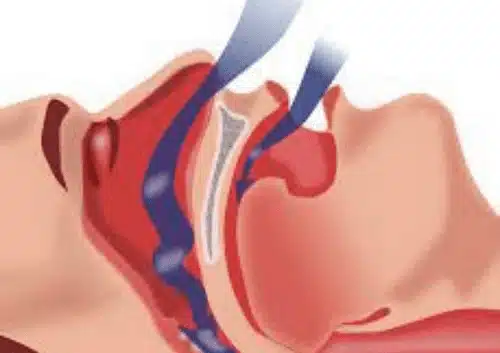
It is important to be aware that there are three different types of sleep apnea: central, obstructive, and mixed (a combination of the two). The most frequent type of sleep apnea is called obstructive sleep apnea, and it occurs when the airway becomes restricted, blocked, or floppy. The condition known as central sleep apnea happens when there is no obstruction of the airway during sleep, yet the brain nevertheless fails to instruct the respiratory muscles to breathe regularly.
Obstructive sleep apnea therapies
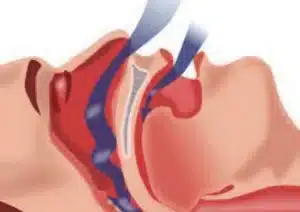
The use of CPAP machines, surgery, or mandibular advancement appliances has traditionally been the treatment of choice for obstructive sleep apnea (OSA). However, these treatments only address the symptoms of the condition and do not address the underlying cause, which can actually make the condition worse over time.
Laser therapy is a terrific new alternative for many different conditions, as it is a non-invasive treatment that does not require any devices or anesthesia and produces effects almost immediately. It does this by stimulating the formation of collagen and decreasing the tissue on the back of the mouth and the tongue, which in turn reduces snoring and opens up the airway. It has a lifespan of approximately one year and can be reapply whenever it is required.
The good news is that we are now able to treat the underlying cause of OSA sleep apnea in both children and adults using innovative technologies and a multidisciplinary approach. This strategy includes chiropractors, myofunctional therapists, sleep doctors, and ENT (ear, nose, and throat) specialists. The symptoms of sleep apnea can be reduced or eliminated entirely if the craniofacial structure is slowly expanded while also being remodeled.
This is achieved by the use of a patented piece of equipment. The majority of patients report that they feel the effects of the treatment within the first few days or weeks, and it is non-invasive, practically undetectable, and painless. To make matters even better, once therapy is finished, obstructive sleep apnea treatment for many people is no longer necessary.
We are only now beginning to understand sleep apnea and how the way we breathe impacts our health and what we can do to enhance it. The recent COVID-19 outbreak has brought to light the importance of taking a holistic approach to dental care, which can ultimately result in a longer and better life.
Being healthy is more vital than it has ever been, and a capable ally in the pursuit of this goal is your dentist.
Do you suspect that you might be suffering from sleep apnea? Make an appointment with the best dentist near me at Summerlin Dental Solutions now to get treatment and a better night’s sleep.
Snoring and Sleep Apnea
Q1: Can a dentist help with snoring and sleep apnea?
Yes. Dentists trained in dental sleep medicine can fabricate custom oral appliances that reposition the lower jaw slightly forward during sleep, keeping the airway open. Dr. Cohan at Summerlin Dental Solutions can evaluate whether an oral appliance might help your snoring or mild to moderate sleep apnea.
Q2: What is the difference between snoring and sleep apnea?
Snoring is vibration of soft tissues during breathing. Sleep apnea is a serious medical condition where breathing repeatedly stops during sleep, sometimes hundreds of times per night. Snoring can be a symptom of sleep apnea but does not always indicate it. A sleep study is needed for diagnosis.
Q3: What is an oral appliance for sleep apnea?
It is a custom-fitted device similar to a retainer that you wear during sleep. It gently advances the lower jaw to keep the airway open. Oral appliances are a comfortable, portable, quiet alternative to CPAP machines for patients with mild to moderate obstructive sleep apnea.
Q4: How much does a dental sleep apnea appliance cost?
Custom oral appliances typically cost $1,500 to $3,000. Many medical insurance plans cover oral appliance therapy for diagnosed sleep apnea. Summerlin Dental Solutions can help coordinate with your physician and insurance for coverage.
Q5: Do I need a prescription for an oral sleep appliance?
Yes, a sleep study and diagnosis from a physician are required before Dr. Cohan fabricates an oral appliance. This ensures the appliance is appropriate for the severity of your condition and that treatment is properly monitored.
Q6: How effective are dental appliances for sleep apnea?
For mild to moderate obstructive sleep apnea, oral appliances are effective for approximately 70 to 80% of patients. They are particularly helpful for patients who cannot tolerate CPAP therapy. Effectiveness varies by individual and should be verified with follow-up sleep testing.
Q7: Can snoring affect my dental health?
Chronic snoring often involves mouth breathing, which dries out oral tissues and reduces saliva flow. This increases the risk of cavities, gum disease, and bad breath. Addressing snoring can improve both your sleep quality and your oral health.
Q8: What symptoms suggest I might have sleep apnea?
Loud snoring, gasping or choking during sleep, excessive daytime sleepiness, morning headaches, difficulty concentrating, irritability, and dry mouth upon waking. If you experience these symptoms, discuss them with your physician and mention it to Dr. Cohan.
Q9: Is a CPAP machine better than a dental appliance?
CPAP is considered the gold standard for severe sleep apnea. However, many patients find CPAP uncomfortable and stop using it. An oral appliance from Summerlin Dental Solutions is often more comfortable and portable, leading to higher compliance rates for mild to moderate cases.
Q10: Can children have sleep apnea?
Yes, and it is often related to enlarged tonsils and adenoids. Signs include snoring, mouth breathing, restless sleep, bedwetting, and behavioral issues. If you suspect your child has sleep apnea, discuss it with their pediatrician and mention it to Dr. Cohan at your next visit.
GET TO KNOW YOUR BEST DENTIST IN SUMMERLIN
Dr. Marianne Cohan was voted The Best Dentist/ Dental Office and Best Cosmetic Dentist from The Las Vegas Review-Journal in 2020 and 2021. She received her Doctor of Dental Surgery (DDS) from the State University of New York at Buffalo in 1992.

With an emphasis on cosmetic dentistry, complete makeovers, and implant dentistry, Dr. Cohan is committed to continuing education and feels that we never stop learning. Dr. Cohan takes pride in using high-powered magnification to perform minimally invasive restorative dentistry. She uses all the latest technological advances including digital radiography, digital photography, computer simulations, and high-resolution pictures of your proposed treatment on 55-inch screens. She also utilizes CBCT (cone beam) and laser technology.
Dr. Cohan is always available to her patients and is available for any dental emergency.